
How to Choose the Right Fifth Wheel for Spring Travel
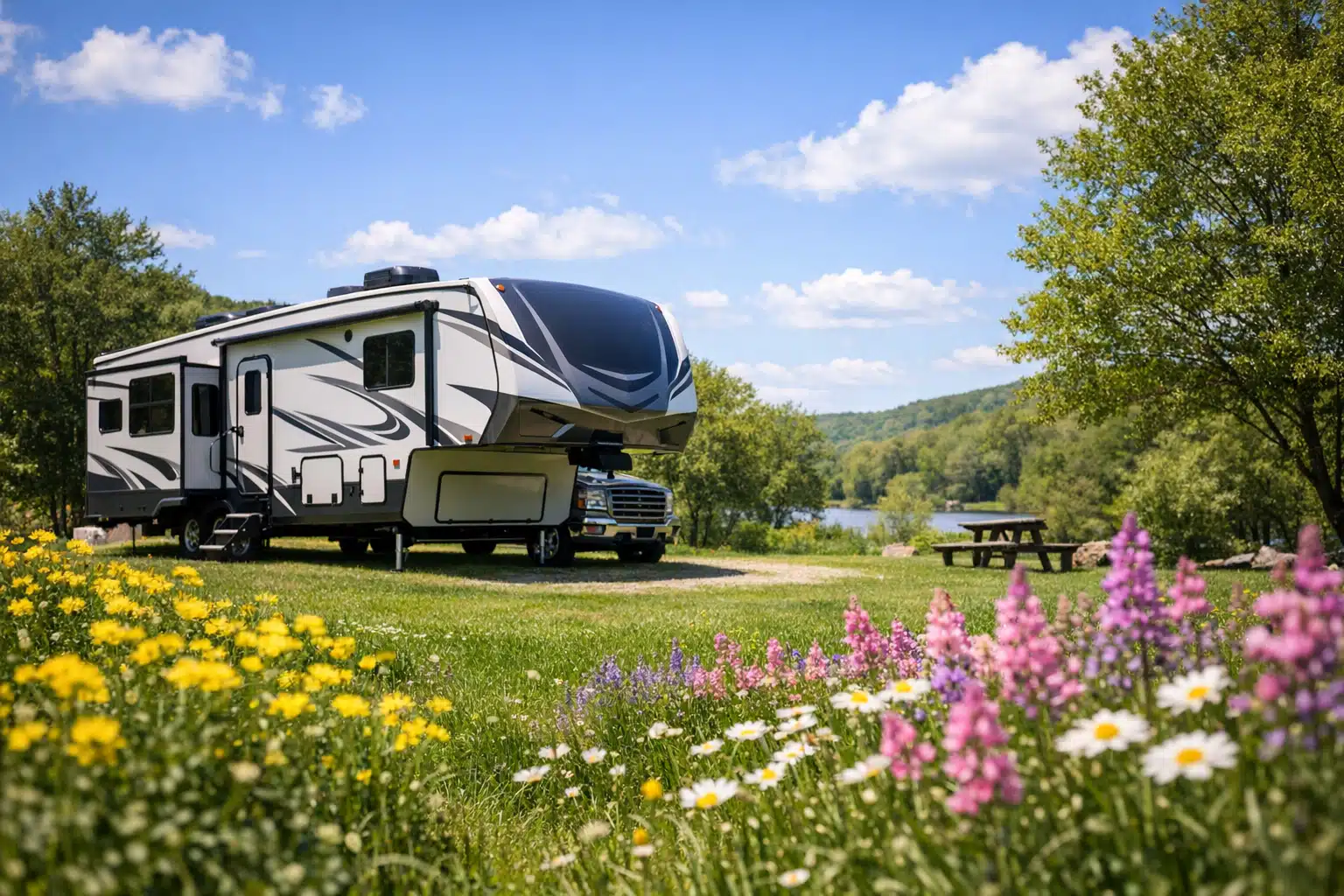
Spring camping requires a fifth wheel that balances towing capacity, climate control for unpredictable weather, and storage for seasonal gear. The right choice depends on your truck's capabilities and planned destinations.
- Your truck should handle at least 20% more than the fifth wheel's maximum loaded weight for safe towing on mountain grades. Lightweight models suit smaller trucks while luxury models over 16,000 pounds need heavy-duty vehicles.
- Climate systems must manage 40-degree temperature swings common in spring - look for ducted air conditioning, efficient propane furnaces, and insulated windows to prevent condensation.
- Units over 35 feet struggle in older state parks and national forest campgrounds. Consider upgraded suspension packages to handle gravel roads and uneven surfaces from winter damage.
Choosing the right fifth wheel for spring travel requires focusing on climate control features like efficient heating systems for cool mornings and good ventilation for warming afternoons. Look for models with quality insulation, weather-resistant seals, and awnings for unpredictable spring weather. Consider lighter weight options for accessing seasonal campgrounds with softer ground conditions and weight restrictions.
Spring camping season demands different considerations than summer or winter travel. Your fifth wheel selection can make or break those perfect 60-degree days when wildflowers bloom and campgrounds aren’t packed.
The right fifth wheel balances weight capacity with fuel efficiency for longer spring road trips. It provides climate control for unpredictable spring weather and enough storage for seasonal gear.
Weight and Towing Requirements for Fifth Wheel Selection
Your truck’s towing capacity determines your fifth wheel options before you consider any other factors. Spring travel often means longer distances to reach destinations, making this calculation critical.
Gross Vehicle Weight Rating (GVWR) represents your fifth wheel’s maximum loaded weight. Your truck must handle at least 20% more than the GVWR to tow safely on mountain grades common in spring destinations.
Most half-ton trucks handle fifth wheels up to 11,000 pounds GVWR. Three-quarter-ton trucks manage 14,000-16,000 pounds comfortably. One-ton trucks can pull 20,000+ pound models.
- Lightweight models (8,000-12,000 lbs): Perfect for first-time buyers or smaller trucks
- Mid-weight models (12,000-16,000 lbs): Best balance of space and towability
- Luxury models (16,000+ lbs): Maximum amenities but require heavy-duty trucks
Floorplan Features for Spring Adventures
Spring weather changes hourly, requiring flexible indoor and outdoor living spaces. Your floorplan should accommodate both sunny afternoons and sudden rainstorms.
Living Area Configuration
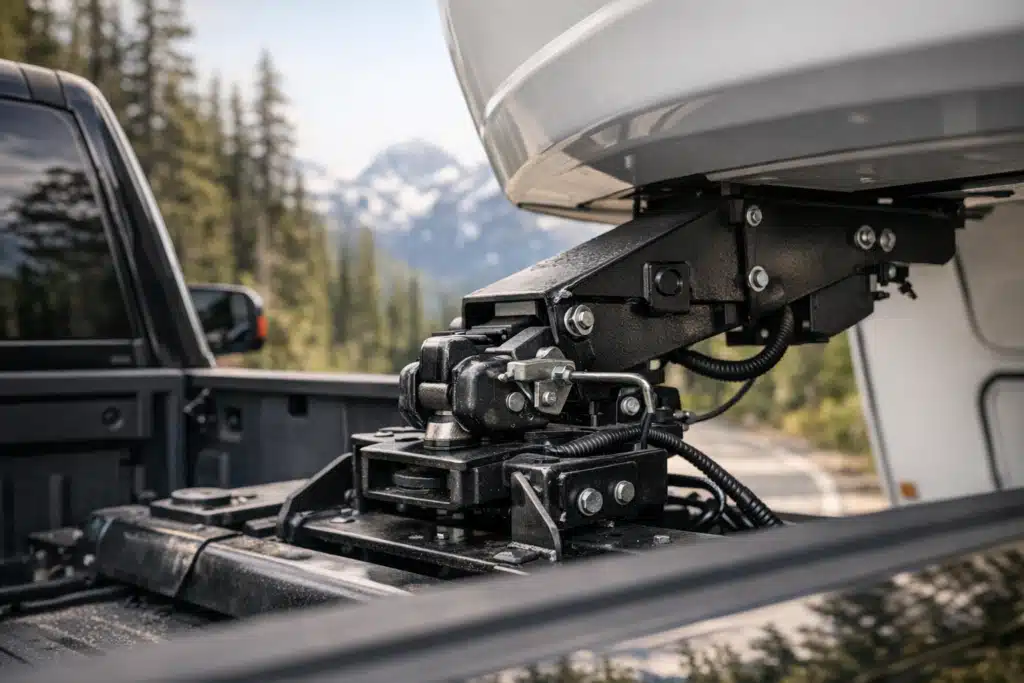
Front living designs place the main seating area over the truck bed with panoramic windows. These layouts work perfectly for spring scenic camping where views matter most.
Rear living models position the bedroom in back with the kitchen and dining forward. This configuration provides better weight distribution and easier hookup procedures.
Slide-Out Considerations
Multiple slide-outs create spacious interiors but require level camping spots. Spring campgrounds often have soft ground that makes leveling challenging.
Single slide models offer good space expansion with simpler setup. No-slide models provide maximum reliability but limited interior room.
Climate Control Systems for Variable Spring Weather
Spring temperatures swing 40 degrees between morning and afternoon in many regions. Your climate system must handle both heating and cooling efficiently.
Ducted air conditioning distributes cool air evenly throughout the unit during warm spring afternoons. Most systems include heat strips for chilly mornings.
Propane furnaces provide primary heating but consume significant battery power for fans. Consider models with efficient furnace designs if you camp without hookups frequently.
- Look for insulated windows to prevent condensation during temperature swings
- Verify adequate ventilation fans for air circulation
- Check thermostat placement away from heat sources and drafts
Finding the Best Fifth Wheel for Spring Travel Destinations
Spring destinations often feature narrow campground roads designed decades ago. Your fifth wheel dimensions affect which campgrounds you can access.
Length matters more than height for most spring camping areas. Units over 35 feet struggle in older state parks and national forest campgrounds.
Ground Clearance and Suspension
Spring camping involves gravel roads and uneven surfaces as maintenance crews repair winter damage. Standard suspension systems handle most improved campgrounds adequately.
Upgraded suspension packages provide better ride quality and protect interior components on rough access roads. These systems cost $2,000-4,000 but prevent costly damage.
Exterior Storage Access
Spring weather requires quick access to rain gear, jackets, and seasonal equipment. Exterior storage design impacts daily convenience significantly.
Pass-through storage spans the full width, providing space for longer items like fishing poles and hiking equipment. Compartmentalized storage keeps items organized but limits large gear storage.

Of course it also saved us sales tax and made purchasing a vehicle very easy.
I recommend them for non US residents and I believe residents can also use them to save tax
 Posted on Google
Power and Utility Systems for Extended Spring Trips
Spring travel often means longer stays in remote locations before summer crowds arrive. Your utility systems must support extended off-grid camping.
Battery capacity determines how long you can camp without electrical hookups. Standard single-battery systems last 1-2 days with conservative use.
Dual battery systems extend capacity to 3-4 days for moderate users. Lithium battery upgrades provide 5-7 days of power but cost $3,000-5,000 more than standard lead-acid systems.
Fresh Water and Waste Capacity
Longer spring trips require adequate tank capacity for extended stays. Fresh water tanks should hold at least 75 gallons for week-long adventures.
Gray and black water tanks need proportional capacity to fresh water. Look for tanks sized at 60-75% of fresh water capacity for proper balance.
- Calculate daily water usage based on planned activities
- Factor in longer stays between dump station visits
- Consider tank heating systems for late spring mountain camping
Budget Considerations for Fifth Wheel Purchases
Spring represents the start of peak RV buying season, affecting both new and used prices. Timing your purchase impacts total cost significantly.
New fifth wheels cost $40,000-150,000 depending on size and features. Used models 3-5 years old typically sell for 60-70% of original prices.
Hidden Costs Beyond Purchase Price
Registration and title fees vary dramatically by state. Montana registration through TaxFree RV saves thousands compared to high-tax states.
Insurance costs depend on fifth wheel value and your driving record. Full-time RV insurance differs from recreational use policies in coverage and cost.
- Extended warranties cost 8-12% of purchase price annually
- Maintenance reserves should equal 3-5% of RV value yearly
- Campground fees range $30-80 per night in spring destinations
Inspection Points for Used Fifth Wheel Purchases
Spring purchases often involve inspecting units stored through winter. Cold weather creates specific issues requiring careful examination.
Water damage appears as soft spots in floors, walls, or ceilings. Check around windows, roof vents, and slide-out seals particularly carefully.
Roof condition determines long-term maintenance costs. EPDM rubber roofs last 15-20 years with proper care. Fiberglass roofs require less maintenance but cost more to replace.
- Test all appliances including air conditioning and heating systems
- Verify slide-out operation under load with all storage filled
- Check tire condition and age – replace tires over 6 years old regardless of tread
- Inspect frame and suspension components for rust or damage
Choosing the right fifth wheel for spring travel requires balancing towing capacity, climate control, and destination accessibility. Focus on models that handle variable spring weather while fitting your truck’s capabilities and planned camping style.
Ready to register your new fifth wheel? Contact TaxFree RV at 1‑888‑441‑5741 to learn how Montana LLC registration can save you thousands in taxes and fees on your purchase.
Sources
- National Highway Traffic Safety Administration – Tire Safety Information
- Recreation.gov – National Park Service Campground Information
- RV Industry Association – RV Safety and Standards