
Preparing for Summer: Key Considerations for Montana LLC Vehicle Owners
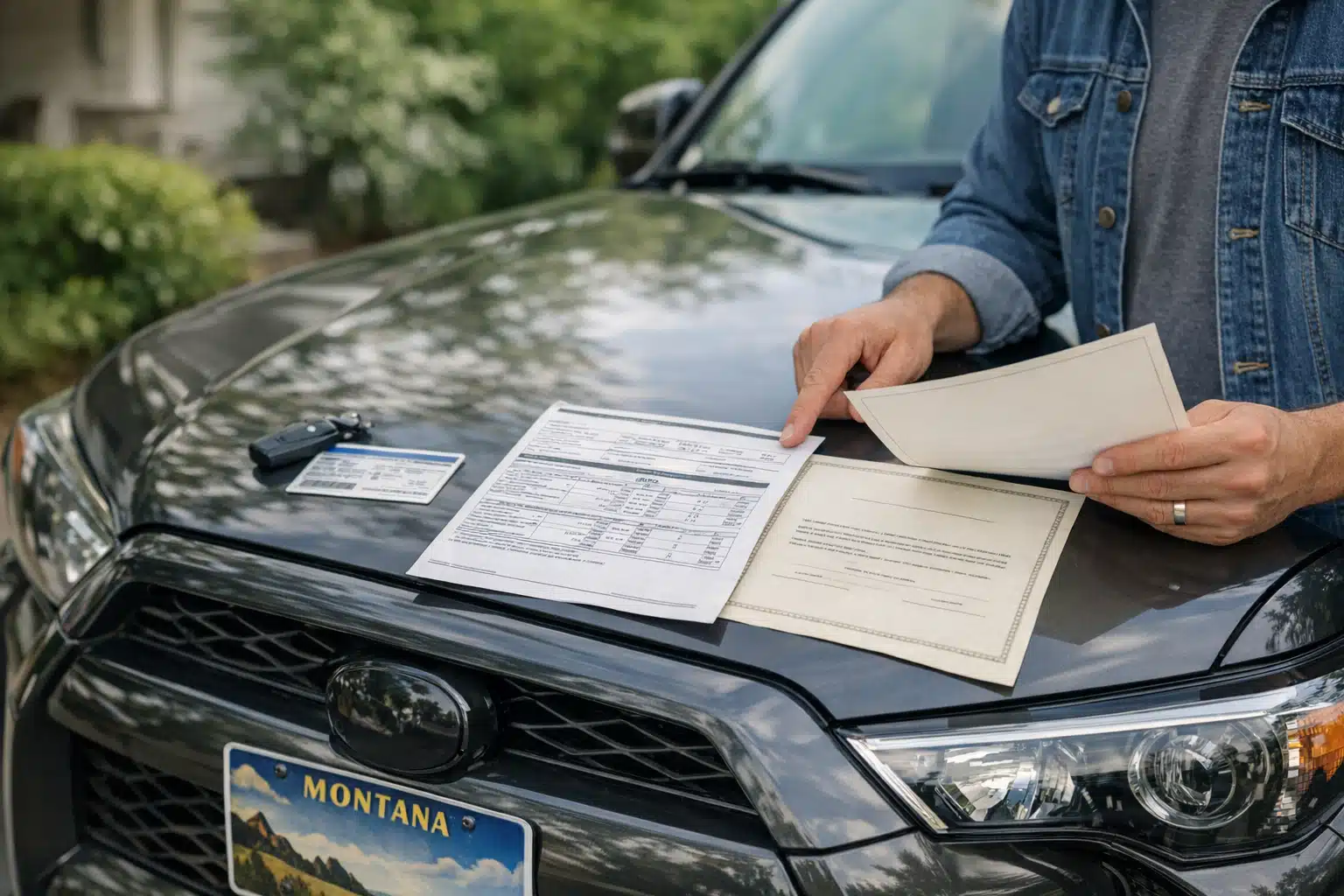
This guide covers summer vehicle preparation for Montana LLC vehicle owners, addressing both mechanical maintenance and legal documentation needs before traveling across state lines.
- Montana LLC owners should verify their LLC standing, registration expiration, insurance documentation, operating agreement, and registered agent status before summer travel. States like California, Texas, and Florida actively scrutinize out-of-state plates on high-value vehicles.
- Summer heat stresses cooling systems, tires, and batteries significantly. Owners should check coolant condition, inspect tire sidewalls for UV damage, load-test batteries, and clean RV air conditioning filters and condenser coils.
- An administratively dissolved LLC means the vehicle is registered to a non-existent entity, which can cause problems during accidents or insurance claims. Renew registrations before summer trips to avoid documentation issues.
Start with spring maintenance checks before summer heat arrives. Inspect your cooling system, check tire pressure and tread depth, test your air conditioning, and examine belts and hoses for wear. Replace windshield wipers, top off all fluids, and verify your battery health. Address small issues now to prevent breakdowns during long summer trips with heavy cargo loads.
Summer Vehicle Preparation Starts Before You Hit the Road
Most vehicle breakdowns during summer travel are preventable. They happen because owners skip seasonal maintenance checks that are straightforward to do in spring — before the heat, the miles, and the loaded cargo turn a small issue into a roadside problem.
For Montana LLC vehicle owners, summer preparation carries a few added layers. Your vehicle is registered under a legal entity in Montana. That means your registration, insurance documentation, and compliance status all need to be current before you travel across state lines or park in a state with aggressive enforcement.
This post covers the mechanical, legal, and logistical side of summer vehicle preparation for Montana LLC owners — so you head into the season without surprises.
Why Montana LLC Owners Face Unique Summer Considerations
A vehicle registered under a Montana LLC is titled and registered in Montana, even if you live somewhere else. That’s legal and common. But summer travel amplifies situations where documentation gaps become visible.

You may be driving through states that actively scrutinize out-of-state plates on high-value vehicles. You may be stopped at an agricultural inspection station. You may be parked at an RV resort where staff ask to see registration.
Having your paperwork in order isn’t just a compliance checkbox — it’s what protects the structure you set up in the first place.
What to Verify Before Summer Travel
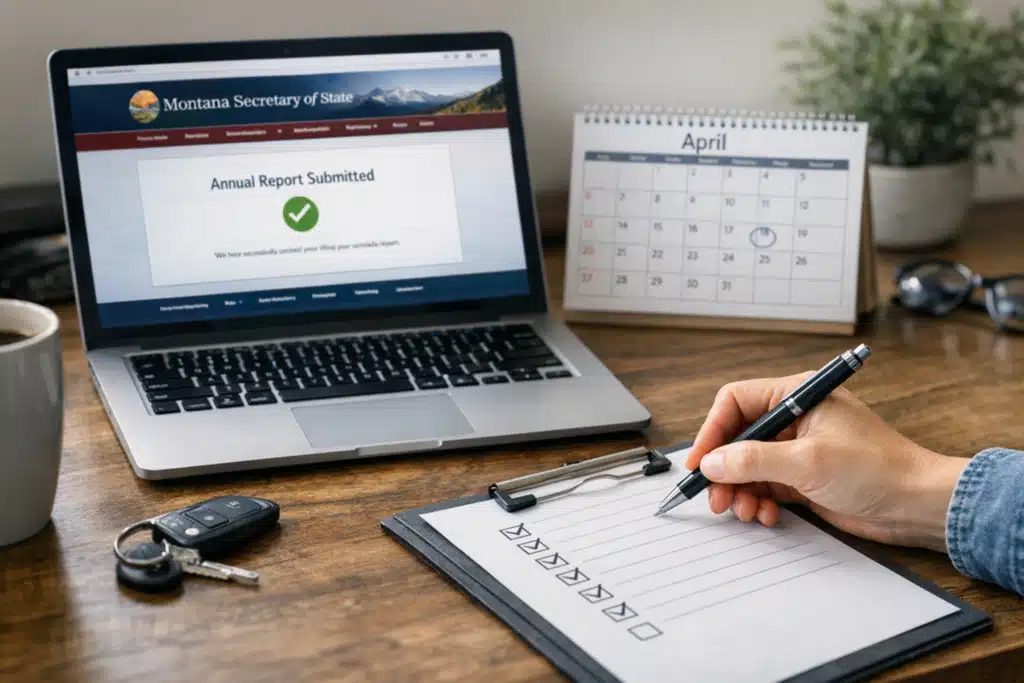
- LLC standing: Confirm your Montana LLC is still in good standing with the Montana Secretary of State. Annual report filings are due by April 15. If you missed it, file before traveling.
- Registration expiration: Check the expiration date on your Montana registration. Montana vehicle registrations are renewed annually. A lapsed registration is a problem regardless of where you’re driving.
- Insurance documentation: Your insurance policy should list the Montana LLC as the named insured. Carry a current declarations page, not just an app screenshot.
- Operating agreement: Keep a copy of your LLC’s operating agreement in the vehicle. It demonstrates the legitimacy of the entity if questioned.
- Montana registered agent status: Your LLC must have an active registered agent in Montana. If yours has lapsed or changed addresses, update it before you travel.
Summer Vehicle Preparation: Mechanical Checks That Matter More in Heat
Summer heat is harder on vehicles than most owners account for. Ambient temperatures above 90°F stress cooling systems, tires, and batteries in ways that moderate-weather driving doesn’t.
For large, high-value vehicles — Class A motorhomes, diesel pushers, toy haulers, exotic cars — the consequences of mechanical failure are expensive and logistically difficult. A blown tire on a $500,000 motorhome in the Arizona desert is a different problem than a flat on a sedan.
Cooling System
The cooling system is the most important mechanical system to check before summer. Overheating is the leading cause of summer engine failures in RVs and tow vehicles.
- Check coolant level and condition. Coolant degrades over time and loses its ability to transfer heat. If it’s been more than two years since a flush, do it now.
- Inspect hoses and clamps. Rubber hoses become brittle with age and heat cycles. Look for cracking, soft spots, or swelling.
- Test the thermostat. A stuck thermostat is a cheap part that causes expensive damage. If your temperature gauge runs higher than it used to, replace it.
- Check radiator fins for debris. Insects, leaves, and road grime clog airflow. A pressure wash from the engine side out clears blockage without damaging fins.
Tires
Tire failures increase sharply in summer. Heat causes tire pressure to rise, and underinflated tires generate additional heat from flexing — a cycle that can end in a blowout.
- Check cold inflation pressure against the manufacturer’s spec, not the number molded on the tire sidewall. Those are two different numbers.
- Inspect tread depth and sidewall condition. Cracks in the sidewall indicate UV degradation. Replace tires showing this damage regardless of tread depth.
- Check the age of your tires. Trailer tires and motorhome tires are generally considered end-of-life at 5-7 years, even with good tread. The manufacture date is stamped on the sidewall as a four-digit DOT code (week/year).
- Carry a torque wrench and check lug nut torque on trailers and duals. Loose lug nuts are a common cause of wheel-off incidents.
Battery and Electrical Systems
Heat kills batteries faster than cold does. A battery that starts fine in spring may fail by mid-July when under constant load from air conditioning and inverters.
- Load-test your chassis battery and any house batteries. A voltage reading alone doesn’t tell you capacity under load.
- Check battery terminals for corrosion. Clean with a baking soda solution and apply anti-corrosion gel after cleaning.
- For lithium house batteries, confirm the battery management system (BMS) is functioning. A failed BMS can cause a lithium battery to fail silently or dangerously.
- Inspect shore power cords for cracking or fraying. Damaged cords at 30A or 50A can arc and cause fires.
Air Conditioning
RV rooftop air conditioners are maintenance items that most owners ignore until they stop working in 100-degree heat.
- Clean or replace the air filter. A clogged filter reduces airflow and forces the compressor to work harder, shortening its life.
- Clean the condenser coils with coil cleaner spray. Dirty coils reduce cooling efficiency measurably.
- Check the capacitor. AC capacitors fail regularly in summer heat. If the unit hums but doesn’t start, the capacitor is usually the cause. A capacitor costs under $30 at most RV supply stores.
Montana LLC Vehicle Tips for Traveling Through High-Scrutiny States
California, Texas, and Florida all have documented patterns of enforcement attention toward out-of-state-registered high-value vehicles. This isn’t speculation — state revenue agencies publish guidance on residency-based registration requirements.
Montana LLC vehicle registration is legal. But it’s legal when structured and maintained correctly. Traveling through these states with a properly documented LLC and current registration is a different situation than traveling with an expired registration or a dissolved LLC.
What to Carry in the Vehicle
- Current Montana registration certificate — not a photo, the physical document or a clearly legible digital copy on a tablet.
- Insurance declarations page — showing the Montana LLC as named insured.
- LLC Certificate of Organization — issued by the Montana Secretary of State.
- Operating agreement — demonstrates the LLC is a real entity with defined membership and purpose.
- Contact information for your Montana registered agent or formation company — if questions arise, having a point of contact on hand is useful.
None of this documentation is hard to obtain. If you worked with TaxFree RV to form your LLC and register your vehicle, all of these documents were provided at the time of formation. Pull them together before you leave.
Pre-Trip Checklist for Summer Departure
Run this checklist before any trip over 200 miles or before your first major summer excursion.
- Montana LLC annual report filed and current
- Vehicle registration current and physical copy in hand
- Insurance declarations page current and matches vehicle
- Coolant flushed or inspected within past two years
- Tires inflated to spec, sidewalls inspected, age verified
- Battery load-tested
- Air conditioning filter cleaned
- Rooftop AC condenser coils cleaned
- Shore power cord inspected
- Lug nuts torqued on trailer or dual rear wheels
- Generator run under load for 30 minutes (if equipped)
- Emergency kit stocked: tire inflation, jumper cables or jump pack, coolant, basic tools

 Posted on Google
Renewals and Registration Updates Before Summer
If your vehicle registration expires between May and August, renew it before your first summer trip. Driving with an expired Montana registration creates a problem that the LLC structure cannot solve.
Montana vehicle registrations can be renewed by mail or through your registered agent. TaxFree RV handles renewal processing for clients who need registration updates before the season starts. Contact the team at sales@taxfreerv.com or call 1-888-441-5741 to confirm your renewal timeline.
If you’ve added a vehicle, sold a vehicle, or changed vehicles since forming your LLC, summer is a good time to verify that your current registration matches the vehicle you’re driving. A registration issued to a different VIN is a documentation problem waiting to surface.
What Happens If You Let the LLC Lapse
An administratively dissolved Montana LLC loses its legal standing. The vehicle registration tied to that LLC is now technically registered to a non-existent entity.
This doesn’t automatically trigger a problem on the road — most traffic stops won’t catch it immediately. But if you’re involved in an accident, an insurance claim, or a registration audit, a dissolved LLC creates serious complications. Your insurer may deny a claim if the named insured (the LLC) no longer legally exists.
Reinstating a dissolved Montana LLC is possible but adds time, cost, and paperwork that’s avoidable with a simple annual report filing. The annual report fee in Montana is $20 for a standard LLC. Missing it to save $20 is not a trade worth making.
Plan for Fuel, Load, and Route Conditions
Summer driving conditions differ from spring or fall in ways that affect large vehicles specifically. Diesel prices shift regionally. Mountain passes see afternoon thunderstorms. Campground reservations fill months in advance at popular destinations.
For Montana LLC vehicle tips that go beyond paperwork: plan your route with your vehicle’s weight rating and tow capacity in mind. Overloaded trailers fail more frequently in heat because tires and brakes are already stressed.
- Check gross vehicle weight rating (GVWR) against your loaded weight before departing.
- Verify brake controller calibration if towing a trailer.
- Research fuel stop availability on remote routes. Some western corridors have 100+ mile gaps between diesel stations.
- Check road condition and weight restriction updates through state DOT websites before traveling mountain routes.
Start Summer With Everything in Order
Summer vehicle preparation for Montana LLC owners covers two parallel tracks: mechanical readiness and legal/documentation readiness. Skipping either one creates risk.
The mechanical side prevents breakdowns. The documentation side protects the registration structure you built. Both are straightforward to address in a few hours before your first major trip of the season.
If you need to renew your Montana registration, reinstate an LLC, add a vehicle, or confirm your documentation is current, TaxFree RV can help. Reach the team at sales@taxfreerv.com, call 1-888-441-5741, or visit taxfreerv.com to get started.
Sources
- Montana Secretary of State – Annual Reports for Business Entities
- National Highway Traffic Safety Administration – Tire Safety
- U.S. Department of Energy – Summer Car Care Tips