
Spring Checklist for Maintaining Your Pontoon Boat
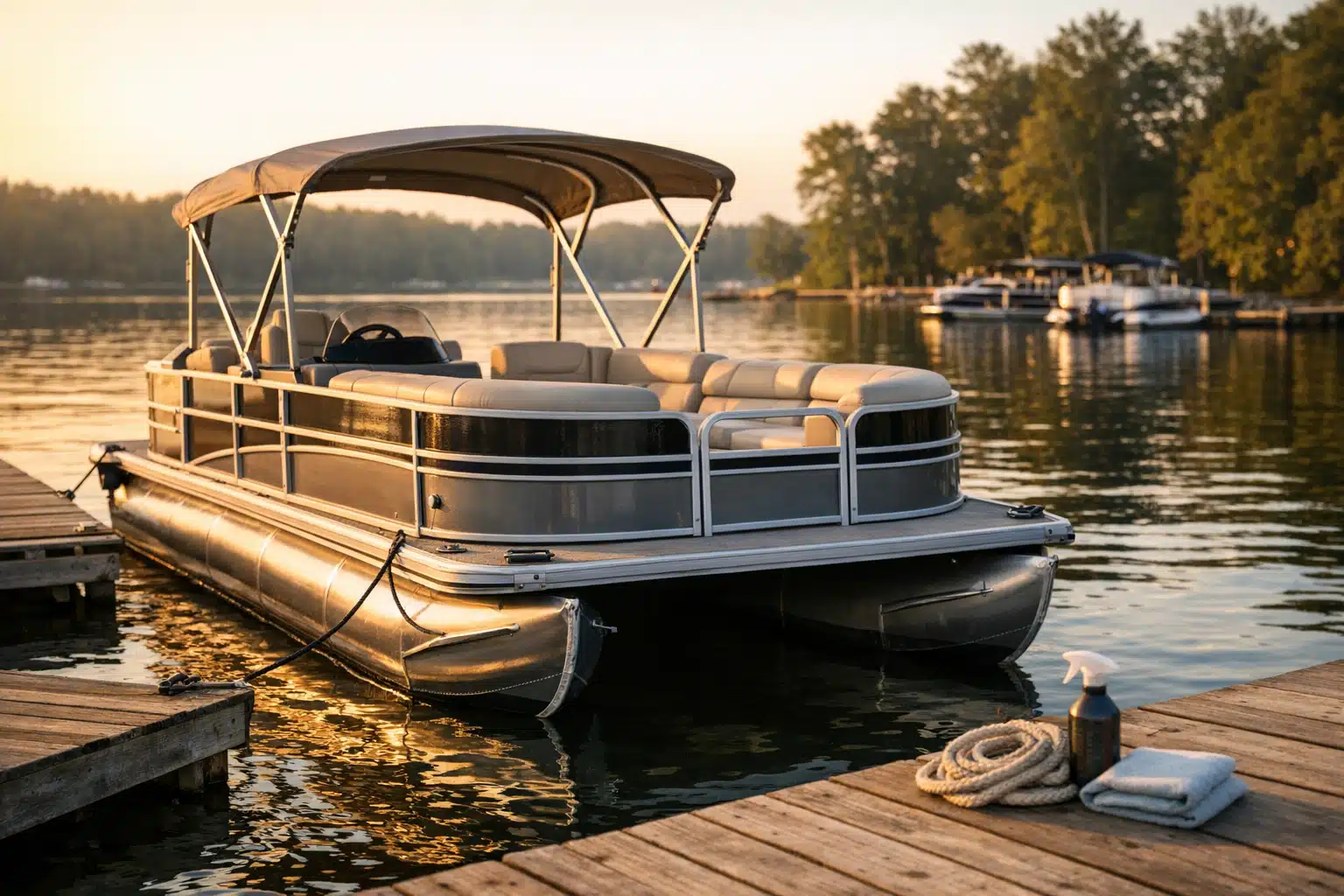
This spring maintenance checklist helps pontoon boat owners prepare their vessels after winter storage, covering hull inspection, engine service, electrical systems, and safety equipment to prevent breakdowns and keep families safe.
- Start by checking pontoons for dents, corrosion, and water intrusion through drain plugs. Clean aluminum surfaces with marine-grade cleaner and apply wax for UV protection.
- Engine prep includes changing oil and filter, replacing spark plugs, inspecting fuel lines, and checking the water pump impeller. Test battery voltage and clean terminals to prevent no-start situations.
- Inspect all safety equipment including life jackets, fire extinguishers, flares, and navigation lights. Verify Coast Guard compliance and check trailer tires and bearings before transport.
Start by inspecting the hull and pontoons for cracks, dents, or corrosion. Check all electrical connections, battery charge levels, and bilge pumps. Examine the engine, fuel system, and propeller for damage. Clean the deck, replace worn safety equipment, and test navigation lights. Finally, lubricate moving parts and verify that all drain plugs are secure before launching.
After months of winter storage, your pontoon boat needs a thorough spring inspection before hitting the water. Pontoon boat spring maintenance prevents costly breakdowns and keeps your family safe during boating season.
This comprehensive checklist walks you through each maintenance step. You’ll learn to inspect your hull, service your engine, check electrical systems, and prepare safety equipment for the season ahead.
Hull and Pontoon Inspection Fundamentals
Start your spring maintenance by examining the pontoons themselves. Look for dents, scratches, or corrosion that may have developed during winter storage or transport.
Check for water intrusion first. Remove drain plugs from each pontoon and watch for water discharge. Any significant water indicates a leak that needs immediate repair before launching.
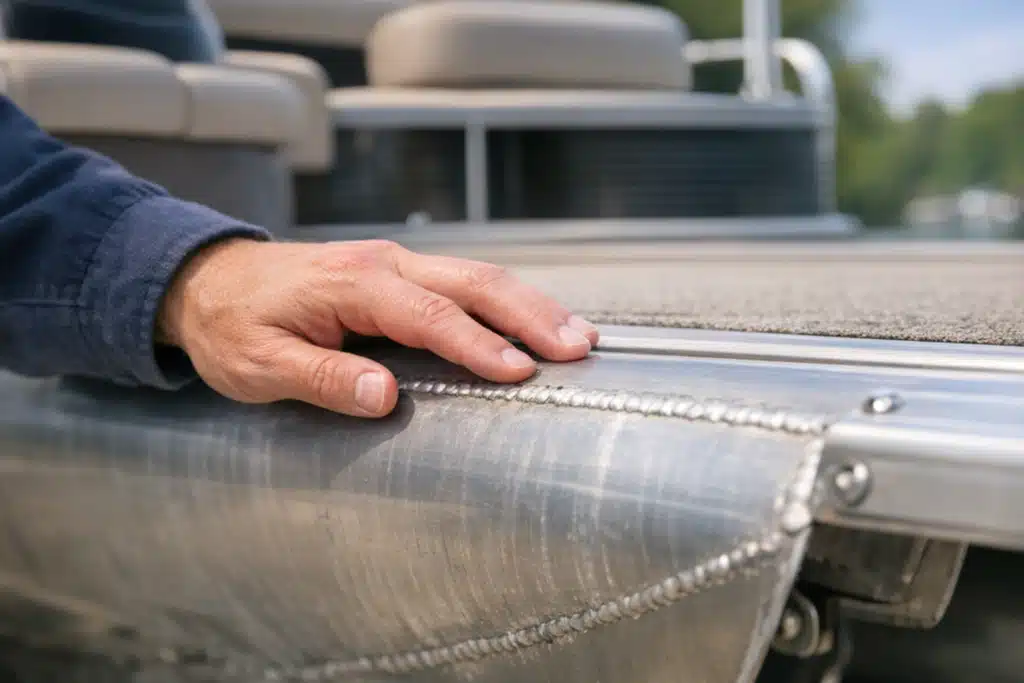
Inspect pontoon welds and seams carefully. Focus on areas where accessories mount to the pontoons, as these stress points often develop small cracks. Run your hand along weld seams to feel for rough spots that indicate corrosion.
Cleaning and Protecting Pontoons
Clean pontoons with marine-grade aluminum cleaner to remove oxidation and stains. Avoid household cleaners that can damage aluminum surfaces or leave harmful residues.
Apply marine wax to protect against UV damage and water spots. Pay extra attention to areas above the waterline, which face the most sun exposure during storage and operation.
Engine and Fuel System Spring Preparation
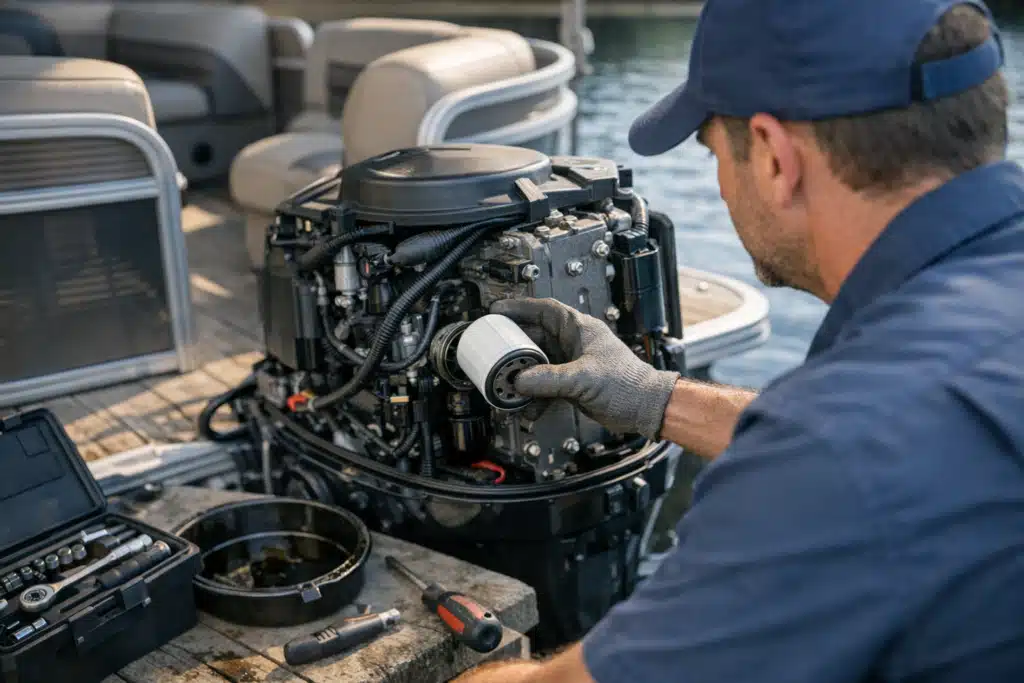
Your engine requires the most attention during pontoon boat spring maintenance. Start by changing the engine oil and filter, even if you did this before winter storage.
Oil degrades over time and can develop moisture contamination during storage. Fresh oil protects engine components and improves performance from the first startup.
Fuel System Maintenance Steps
- Check fuel tank for water contamination by examining a small sample in a clear container
- Replace fuel filter to remove any debris that settled during storage
- Add fresh fuel if tank contains old gasoline from last season
- Inspect fuel lines for cracks, especially near connection points
- Test fuel gauge accuracy by comparing tank level to gauge reading
Replace spark plugs annually for optimal engine performance. Check the owner’s manual for specific plug types and gap specifications for your engine model.
Cooling System Checks
Inspect water pump impeller for damaged or missing blades. Impellers deteriorate during storage and can fail catastrophically if not replaced regularly.
Check thermostat operation by monitoring engine temperature during the first few runs. A stuck thermostat causes overheating that can destroy your engine quickly.
Electrical System Safety Inspection
Battery maintenance prevents frustrating no-start situations on launch day. Test battery voltage with a multimeter – readings below 12.4 volts indicate charging needed.
Clean battery terminals with baking soda solution to remove corrosion buildup. Apply terminal protector spray to prevent future corrosion during the season.
Navigation and Safety Light Testing
Test all navigation lights before your first outing. Replace burned bulbs and check wiring connections for corrosion or damage.
Verify anchor light operation separately from running lights. Many boaters discover anchor light failures only when anchored after dark, creating dangerous situations.
- Bow navigation lights (red and green)
- Stern white light
- Anchor light (white, 360-degree)
- Interior lighting circuits
- Bilge pump operation
Safety Equipment and Compliance Check
Coast Guard safety requirements change periodically, making annual equipment review necessary. Your pontoon preparation checklist must include personal flotation device inspection and emergency equipment testing.
Inspect life jackets for torn fabric, broken zippers, and compressed foam. Replace any life jacket showing wear or damage – they lose buoyancy over time.
Emergency Equipment Verification
Test fire extinguisher pressure gauges and mounting brackets. Fire extinguishers lose pressure gradually and may not function when needed most.
Check flare expiration dates and replace outdated pyrotechnics. Expired flares often fail to ignite or produce insufficient light for emergency signaling.
Verify sound signaling device operation – air horns lose pressure and whistles can become clogged with debris during storage.
Deck and Furniture Restoration
Pontoon boat furniture suffers UV damage and moisture exposure during storage. Clean vinyl seating with marine-grade cleaners that won’t crack or fade surfaces.
Treat fabric seats with waterproofing spray to resist mildew and staining. Remove and wash cushion covers if possible for thorough cleaning.
Deck Surface Maintenance
Inspect carpet for mold, mildew, or animal damage that occurred during storage. Replace damaged sections before they spread contamination to healthy areas.
Check deck hardware like cleats and railings for loose fasteners. Vibration during transport and thermal expansion can loosen connections over winter.

Of course it also saved us sales tax and made purchasing a vehicle very easy.
I recommend them for non US residents and I believe residents can also use them to save tax
 Posted on Google
Trailer and Transport Systems
Your boat trailer needs spring maintenance to safely transport your pontoon. Check tire pressure and tread depth before moving the boat anywhere.
Inspect wheel bearings by spinning wheels and listening for grinding sounds. Bearing failure during transport can damage wheels, axles, and your boat.
Trailer Electrical Connection
Test trailer lights with your tow vehicle before heading to the launch. Check brake lights, turn signals, and running lights for proper operation.
Apply dielectric grease to trailer plug connections to prevent corrosion from moisture and road salt exposure.
Launch Day Preparation
Complete a final systems check before leaving for the launch ramp. Start your engine and let it reach operating temperature while connected to a flush attachment.
Pack emergency supplies including tools, spare parts, and communication devices. Cell phone coverage varies on many lakes, making backup communication important.
Verify boat registration and safety equipment compliance one final time. Getting stopped by marine patrol for expired registration ruins any boating day.
Conclusion
Following this spring maintenance checklist keeps your pontoon boat reliable and safe throughout boating season. Regular maintenance prevents expensive repairs and protects your family during water activities.
Complete these steps methodically before launch day to avoid discovering problems at the ramp. TaxFree RV helps boat owners with registration services and compliance guidance – contact us at 1‑888‑441‑5741 for assistance with your pontoon boat documentation needs.
Sources
- U.S. Coast Guard – Recreational Boat Equipment Requirements
- Boat Safety Education – Boat Maintenance Guidelines
- National Marine Manufacturers Association – Boating Statistics