
Preparing Your Snowmobile for Off-Season Storage
Post-winter snowmobile storage requires specific steps to address corrosive salt residue and moisture from winter riding. Skipping these procedures can lead to seized engines, corroded parts, and costly spring repairs.
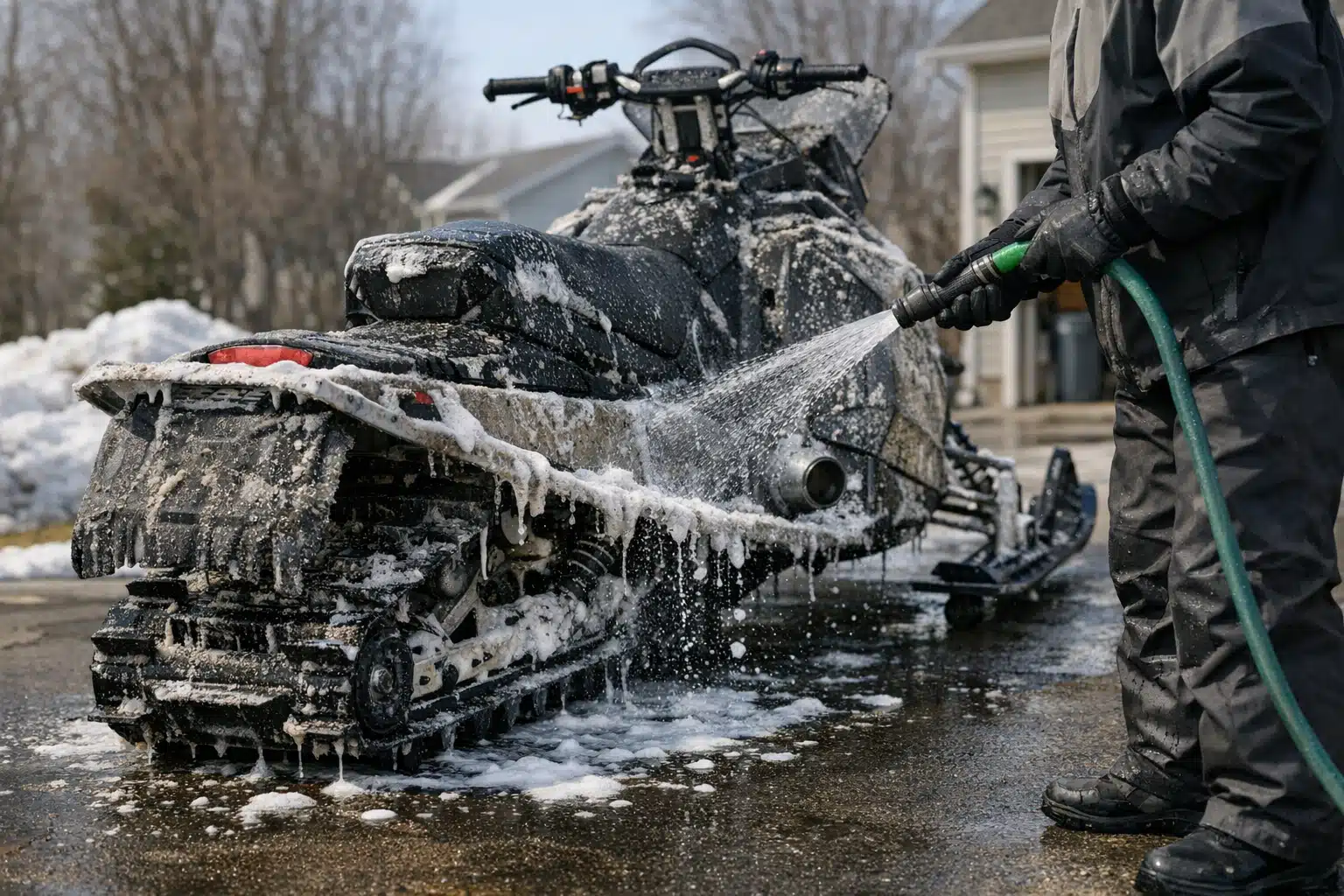
- Wash salt and debris within 48 hours of your last ride, paying attention to suspension, exhaust, and running boards - then dry all surfaces completely to prevent corrosion.
- Add fuel stabilizer to a full tank and run the engine 10 to 15 minutes, then fog cylinders with oil and change engine oil before storage to prevent internal rust and gum deposits.
- Remove the drive belt to prevent stretching, take out the battery and connect it to a tender, and block the track off the ground to avoid flat spots during storage months.
After winter use, snowmobile storage preparation involves removing salt residue and moisture that accumulated during rides. Clean the exterior thoroughly to eliminate corrosive elements, drain or stabilize fuel, lubricate moving parts, and disconnect the battery. These steps prevent damage during months of inactivity and keep your machine ready for next season.
Your snowmobile just finished another winter season, covered in salt residue and moisture from countless rides. Snowmobile storage preparation after winter use requires different steps than pre-season storage because your machine carries corrosive elements that can cause damage during months of inactivity.
Post-winter storage demands immediate attention to fuel systems, cooling components, and metal surfaces exposed to road salt. Skip these steps and you risk seized engines, corroded parts, and expensive spring repairs.
Clean Salt and Road Debris Before Storage
Salt accumulation from winter riding creates the biggest threat to your stored snowmobile. Road salt continues corroding metal components even when your machine sits idle.
Wash your snowmobile with warm water and mild detergent within 48 hours of your last ride. Pay special attention to the suspension components, exhaust system, and running boards where salt concentrates.
Dry all surfaces completely before moving to the next storage step. Trapped moisture under panels or in crevices accelerates corrosion during storage months.
Fuel System Preparation for Extended Storage
Ethanol-blended fuels left in your snowmobile tank separate and form gum deposits that clog carburetors and fuel injectors. Fuel stabilization prevents these issues but requires specific timing after winter use.
Add Fuel Stabilizer and Run the Engine
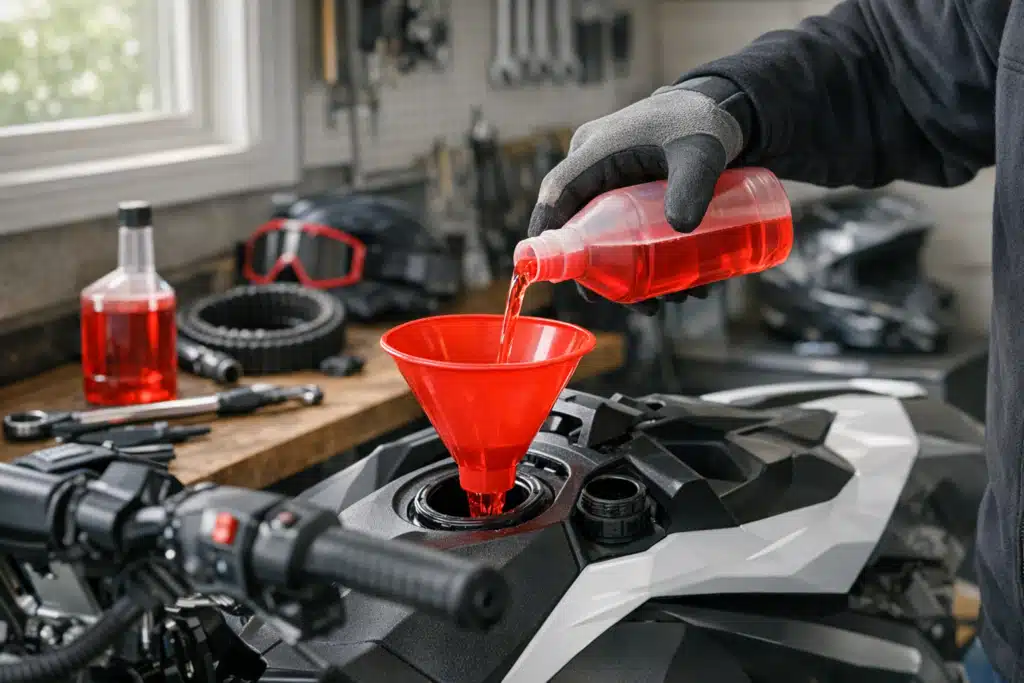
Fill your gas tank completely and add fuel stabilizer at the manufacturer’s recommended ratio. Run the engine for 10-15 minutes to circulate stabilized fuel through the entire system.
Remove the fuel tank cap periodically during storage to prevent vacuum buildup. Some riders prefer to drain the tank completely, but stabilized fuel provides better protection for fuel system components.
Fog the Engine Cylinders
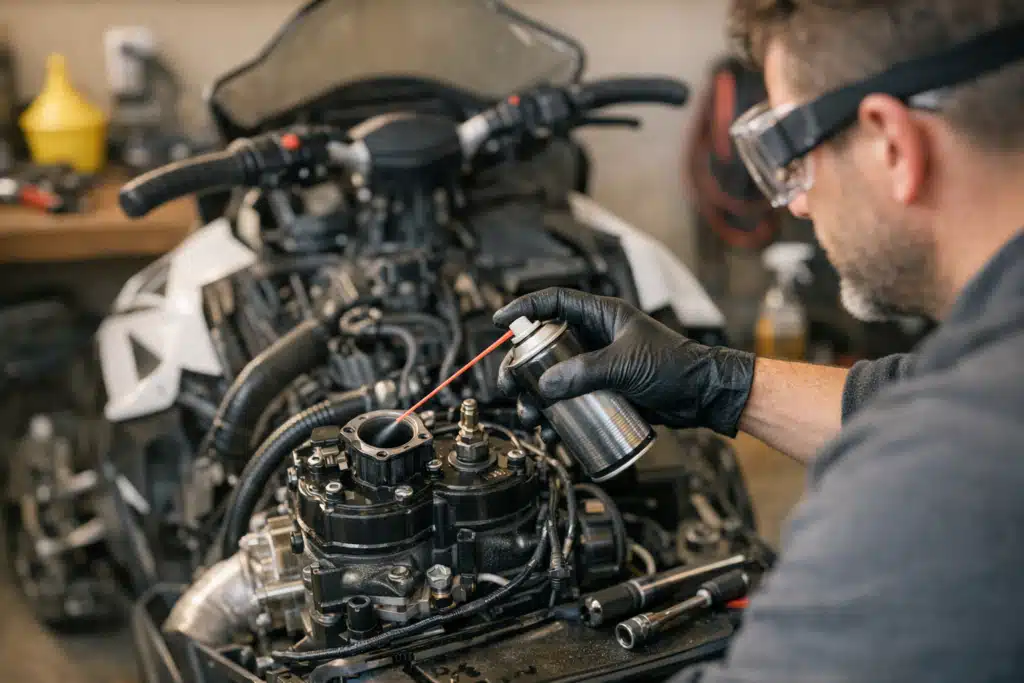
Engine fogging oil prevents cylinder walls and pistons from rusting during storage. Remove the spark plugs and spray fogging oil into each cylinder while manually turning the engine over.
Replace spark plugs with new ones rather than reinstalling used plugs. This saves time during spring preparation and prevents fouled plugs from moisture absorption.
Engine Oil and Coolant Changes
Used engine oil contains combustion byproducts and moisture that cause internal corrosion during storage. Change the engine oil and filter before storage, even if recently serviced.
Fresh oil provides better protection against moisture and acid formation. Run the engine briefly after the oil change to circulate new oil through all passages.
Coolant System Maintenance
Check coolant concentration with a hydrometer to verify proper freeze protection. Weak coolant can freeze and crack engine components even in heated storage areas.
Replace coolant if it appears rusty or contaminated. Clean coolant prevents internal corrosion and maintains proper heat transfer when you restart your snowmobile.
Drive System and Suspension Care
Your drive belt, clutches, and suspension components need attention after winter use. These parts collect moisture and debris that can cause problems during storage.
Drive Belt and Clutch Maintenance
Remove the drive belt from the clutches to prevent permanent stretching during storage. Clean both primary and secondary clutches with clutch cleaner to remove belt residue and moisture.
Store the drive belt flat in a cool, dry location away from electric motors or fluorescent lights. Ozone from these sources degrades rubber compounds.
Suspension Lubrication
Lubricate all suspension grease fittings with marine-grade grease that resists moisture intrusion. Pump grease until fresh grease appears at each fitting.
Clean and lubricate the track suspension rails and slides. Replace worn slides before storage rather than waiting until spring when parts availability may be limited.
Electrical System Protection
Remove the battery and store it in a cool, dry location connected to a battery tender. Lead-acid batteries self-discharge during storage and can freeze if the charge drops too low.
Disconnect all electrical connections and spray them with dielectric grease. This prevents corrosion and moisture intrusion during humid storage conditions.
Cover the airbox intake and exhaust outlet with plastic bags secured by rubber bands. This prevents rodents from nesting in these areas during storage.

 Posted on Google
Storage Location and Positioning
Choose a storage location that maintains consistent temperature and low humidity. Heated buildings work best, but unheated storage is acceptable if moisture control is managed.
Proper Positioning Techniques
Block the rear of the track off the ground to prevent flat spots from forming. Place jack stands under the tunnel rather than leaving the full weight on the track.
Position the snowmobile to allow air circulation around all components. Leave space between stored vehicles to prevent moisture accumulation.
Moisture Control Methods
Place moisture-absorbing packets inside the engine compartment and under the hood. Replace these packets monthly during extended storage periods.
Cover your snowmobile with a breathable cover that allows air circulation while protecting from dust. Plastic tarps trap moisture and should be avoided.
Monthly Storage Inspections
Off-season maintenance includes regular checks during storage months. Monthly inspections catch problems before they become expensive repairs.
Check for rodent activity, moisture accumulation, and fluid leaks during each inspection. Document any issues you find for spring maintenance planning.
Rotate the track slightly each month to prevent flat spots. This is especially important for rubber tracks stored in cold environments.
Pre-Season Preparation Checklist
Spring preparation becomes easier when you complete proper storage procedures. Document all maintenance performed during storage for reference.
Plan your spring startup procedure based on storage conditions and any issues discovered during monthly inspections. Order replacement parts early to avoid delays.
Test all fluid levels and electrical connections before your first ride. A systematic approach to spring preparation prevents breakdowns and extends equipment life.
Proper snowmobile storage preparation protects your investment and reduces spring maintenance costs. Following these post-winter storage techniques prevents the most common storage-related problems.
Just as TaxFree RV helps simplify vehicle registration for RV owners, proper storage preparation simplifies your snowmobile’s return to service. Contact TaxFree RV at 1‑888‑441‑5741 or visit https://taxfreerv.com for Montana LLC vehicle registration services.
Sources
- EPA – Gasoline Standards and Ethanol Effects
- University of Minnesota Extension – Small Engine Storage Guidelines
- NHTSA – Tire and Rubber Component Storage