
Montana LLC Vehicle Registration for Canadian Residents: Summer 2026 Update
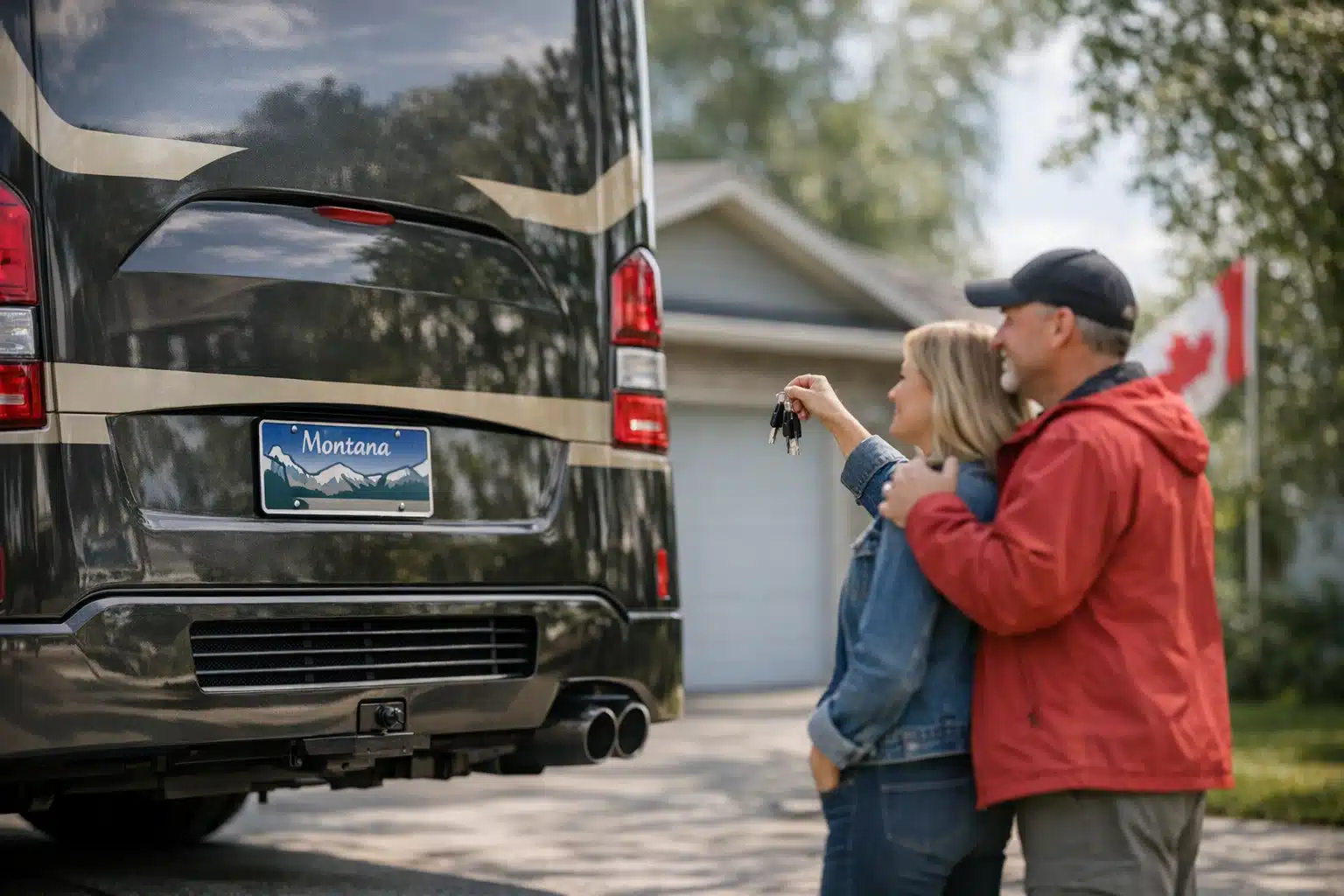
Canadian residents can use Montana LLCs to register vehicles and avoid U.S. state sales tax, with savings potentially exceeding $30,000 on high-value RVs. The strategy remains legal in 2026 but requires proper documentation, especially during summer border crossings when customs scrutiny increases.
- Montana LLCs let Canadians title vehicles under a business entity with no state sales tax or inspections. Formation costs $70 USD with annual reports of $20 USD required to keep the LLC active.
- Border agents check for principal use - vehicles spending most time in Canada risk being classified as imports subject to Canadian duties and taxes. Organized documentation including the LLC operating agreement and title is needed at every crossing.
- Insurance requires both a U.S. policy naming the LLC and separate Canadian coverage for when the vehicle is stored at home. Standard Canadian auto policies typically will not cover Montana-registered vehicles.
Montana LLC vehicle registration allows Canadian residents to form a limited liability company in Montana and register vehicles through it. This approach offers potential tax savings since Montana has no sales tax on vehicles. The LLC legally owns the vehicle, and registration fees are typically lower than in Canadian provinces. However, Canadian owners must handle border declarations, maintain proper insurance coverage, and follow customs requirements when crossing into Canada.
Canadian residents have been registering vehicles through Montana LLCs for years — and the strategy still works in 2026. But the summer travel season adds layers that most guides skip: border crossing declarations, Canadian insurance gaps, and customs scrutiny that peaks between June and September. This post covers exactly what Montana LLC vehicle registration for Canada looks like right now, what changed heading into 2026, and what to get right before you drive that RV or motorcoach across the border.
If you bought or plan to buy a high-value vehicle — RV, motorhome, trailer, or luxury car — and you live in Canada, this is the registration path most buyers in your position use to avoid U.S. state sales tax. The Montana LLC method is legal. It is also paperwork-intensive if you go at it alone.
TaxFree RV handles Montana LLC vehicle registration for Canadian residents from start to finish. What follows gives you the full picture so you can make an informed decision before you sign anything.
What Montana LLC Vehicle Registration for Canada Actually Means
A Montana LLC vehicle registration is a method where a limited liability company is formed in Montana, and the vehicle is titled and registered under that LLC — not under your personal name. Montana has no state sales tax and no vehicle inspections. The vehicle is legally owned by a Montana business entity.
For Canadian residents, this means you can purchase a Class A motorhome in Arizona, title it through a Montana LLC, and pay zero U.S. state sales tax on that purchase. The savings on a $400,000 RV can exceed $30,000 USD depending on the state where the dealer is located.
You do not need to live in Montana. You do not need to physically visit Montana. The LLC is formed there as a legal entity, and the vehicle registration follows automatically.
Why Canadians Use This Method More Than Americans
Most U.S. residents face a complication: if they garage a Montana-registered vehicle in their home state, that state may demand registration and tax payment. Canadian residents do not have a U.S. home state. That removes the primary compliance risk Americans face.
A Canadian resident who keeps their vehicle in Canada and crosses into the U.S. seasonally is in a structurally different position. The vehicle is foreign-plated from a U.S. perspective, and it re-enters Canada as a foreign-registered vehicle each time. That distinction matters at the border — more on that below.
2026 Requirements for Canadian Residents Montana LLC Registration
The core Montana LLC formation and registration steps have not changed dramatically for Canadian residents Montana LLC 2026, but there are updated documentation and compliance details worth knowing.
What You Need to Form the LLC
- Passport copy — government-issued ID confirming Canadian residency
- Canadian address — used for LLC member records; a Montana registered agent handles the in-state address requirement
- Vehicle purchase agreement or title — needed to register the vehicle under the LLC
- Vehicle identification number (VIN) — must match the purchase documents exactly
- LLC formation fee — Montana charges $70 USD for a standard LLC filing as of 2025/2026
- Annual registered agent fee — ranges from $49–$150/year depending on the provider
Registration Timeline
Montana LLC formation typically processes in 5–7 business days. Vehicle title and registration follow within 2–4 weeks once the LLC is active and purchase documents are submitted. Montana issues permanent registration plates — no annual renewal sticker is required for most vehicle classes.
TaxFree RV can often compress this timeline for clients who need plates before a planned trip south. If you have a specific departure date, mention it upfront.
Ongoing Requirements
Montana LLCs must file an annual report with the Montana Secretary of State. The fee is $20 USD. Missing this filing can result in administrative dissolution of the LLC, which creates a registration problem for the vehicle. Set a calendar reminder or have your registration company handle renewals automatically.
Crossing the Border With a Montana-Plated Vehicle: What Customs Actually Asks
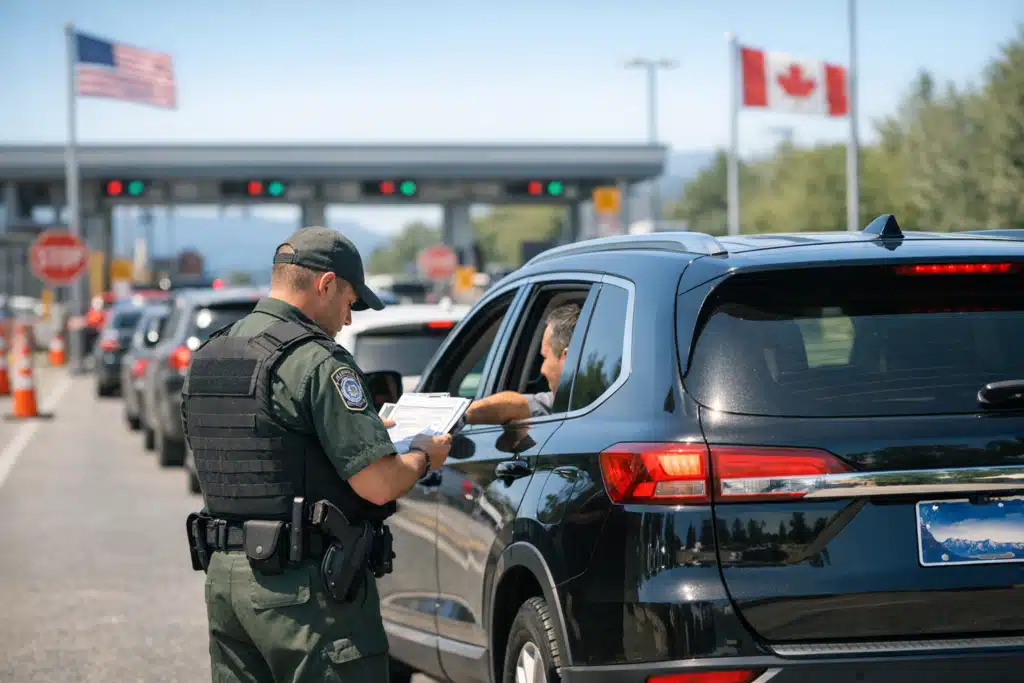
This is where summer travel planning gets real. Canadian Border Services Agency (CBSA) officers are familiar with Montana plates. They ask questions. Knowing the right answers — and having the right documents — is not optional.

What CBSA Looks for at the Border
When a Canadian resident returns to Canada in a Montana-plated vehicle, CBSA may assess whether the vehicle should be imported into Canada. If you use the vehicle primarily in Canada, CBSA can classify it as an importation — which triggers Canadian duties, GST, and provincial tax.
The key factor is “principal use.” A vehicle that spends 8 months in British Columbia and 4 months in the U.S. Sun Belt is at risk of being treated as a Canadian-domiciled vehicle. A vehicle that genuinely travels south for extended periods and returns for the summer is in a different position.
Documents to Carry Every Time You Cross
- Montana LLC operating agreement (shows you are the managing member)
- Montana title in the LLC’s name
- Montana registration certificate
- Purchase receipt or bill of sale
- Insurance documents (see next section)
Border officers have the authority to detain a vehicle if ownership documentation is unclear. An LLC with your name as the sole member, managed by you, is a straightforward ownership chain. Make sure your operating agreement reflects this clearly.
Re-Entry Timing and the Summer Season
Summer is when Canadian snowbirds return from the U.S. CBSA staffing at major crossings — Pacific Highway, Peace Bridge, Emerson — increases from May through September. So does scrutiny of high-value vehicles. A $500,000 motorcoach crossing at Osoyoos in June will get a second look.
Have a folder — physical or digital — with every document listed above. Officers respond well to organized, confident documentation. Fumbling through a glove box raises flags.
Insurance: The Gap That Catches Canadian Buyers Off Guard
Montana registration does not come with insurance. That sounds obvious, but the downstream implications are less obvious for Canadian residents.
U.S. Coverage for a Montana-Plated RV
Most standard Canadian auto insurance policies will not cover a Montana-registered vehicle. The vehicle is titled to an LLC — a U.S. business entity. You need a U.S.-based insurance policy issued in the name of the Montana LLC.
Several U.S. insurers write policies for Montana LLCs, including specialty RV insurers. Good Sam, National General, and Progressive all offer LLC-titled RV coverage. Premiums are generally similar to standard RV coverage, though some insurers require proof of U.S. garaging address, which a Montana registered agent address can satisfy.
Canadian Coverage for When You’re Back Home
When the RV is parked at your property in Alberta or Ontario, it needs to be covered under a Canadian policy. Some Canadian insurers — particularly in the RV specialty market — will write coverage for a foreign-registered vehicle stored in Canada. This often requires a separate policy from your U.S. coverage.
Do not assume your existing Canadian home or auto policy extends to a Montana-plated RV. Call your broker before the vehicle crosses into Canada for the first time.
Liability Minimums by Province
If a Montana-plated RV is involved in an accident in British Columbia, BC’s Motor Vehicle Act requires minimum third-party liability coverage. Foreign-plated vehicles must meet the insurance minimums of the province where they are operating. Most U.S. RV policies meet or exceed Canadian minimums, but verify this with your insurer in writing.
Common Mistakes Canadian Residents Make With Montana LLC Registration
These are patterns seen repeatedly — not hypotheticals.
- Forming the LLC but not completing vehicle registration — the LLC alone is not enough; the title must be transferred to the LLC before you take possession of the vehicle
- Using a family member’s U.S. address as the LLC member address — this can create nexus issues in that U.S. state
- Letting the annual report lapse — a dissolved LLC means the registration becomes invalid
- Failing to update the LLC operating agreement when adding a co-owner — both names must appear correctly or border officers may question ownership
- Buying insurance before the LLC is finalized — the policy must name the LLC as the insured, not you personally
- Not informing their Canadian insurer before returning home — gaps in coverage can leave the vehicle unprotected during transport

 Posted on Google
Is Montana LLC Vehicle Registration Legal for Canadian Residents?
Montana LLC vehicle registration is legal for Canadian residents. Montana law permits non-residents to form LLCs. There is no residency requirement. The LLC is a legitimate legal entity that can own property, including vehicles.
The legal question that sometimes comes up involves provincial tax authorities — specifically, whether a province can claim that you owe provincial sales tax on a vehicle you own through a Montana LLC. This is a separate question from U.S. law, and it depends on how and where the vehicle is used. Canadian tax professionals familiar with cross-border vehicle ownership can advise on provincial exposure.
TaxFree RV handles the Montana side. For Canadian tax questions, work with a Canadian accountant or tax lawyer who has cross-border experience.
How TaxFree RV Handles Montana LLC Registration for Canadian Clients
TaxFree RV forms the Montana LLC, acts as or coordinates the registered agent, handles the title transfer, and secures the Montana registration and plates — all remotely. Canadian clients do not travel to Montana at any point.
The typical workflow for Montana LLC vehicle registration Canada clients looks like this:
- Submit your identification documents and vehicle purchase information
- TaxFree RV files the Montana LLC with the Secretary of State
- Once the LLC is active, vehicle title is transferred to the LLC
- Montana registration is applied for; plates are issued
- Plates and registration documents are mailed to you (or the dealer, if coordinated)
Most clients in Canada receive their plates within 3–5 weeks of starting the process. Rush processing is available for buyers with firm delivery dates.
Summer 2026 Planning: What to Do Before You Travel
If you plan to drive a Montana-registered vehicle across the U.S.-Canada border this summer, here is a pre-departure checklist:
- Confirm your Montana LLC annual report is current (due April 15 each year)
- Verify your U.S. RV insurance is active and names the LLC correctly
- Confirm your Canadian storage or transit insurance is in place
- Organize your LLC operating agreement, title, and registration in one folder
- Know your CBSA re-entry declaration — the vehicle is foreign-registered and you are its beneficial owner through the LLC
- If crossing at a busy port of entry during peak summer weeks, plan for potential secondary inspection
Summer 2026 is expected to bring higher border volumes than 2025 due to pent-up travel demand and favorable USD/CAD exchange rates making U.S. purchases attractive. More Canadian buyers are registering vehicles through Montana LLCs this year. CBSA is aware of this trend.
Key Takeaways for Canadian Residents in 2026
Montana LLC vehicle registration remains a legal, well-established method for Canadian residents to purchase U.S. vehicles without paying state sales tax. The 2026 requirements are straightforward, but the border crossing and insurance layers require preparation that most generic guides do not address.
Get your documentation in order before you travel. Confirm insurance on both sides of the border. Keep your LLC in good standing. These three actions prevent the vast majority of problems Canadian clients encounter.
To start your Montana LLC registration or get answers specific to your vehicle purchase, contact TaxFree RV at taxfreerv.com, call 1-888-441-5741, or email sales@taxfreerv.com. Canadian clients are welcome, and the process is handled entirely by mail and electronic filing — no Montana trip required.
Sources
- Montana Secretary of State – Business Services
- Canada Border Services Agency – Importing a Vehicle
- Canada Revenue Agency – GST/HST on Imported Goods