
Can You Register a Vehicle with a Lienholder Using a Montana LLC in 2026?
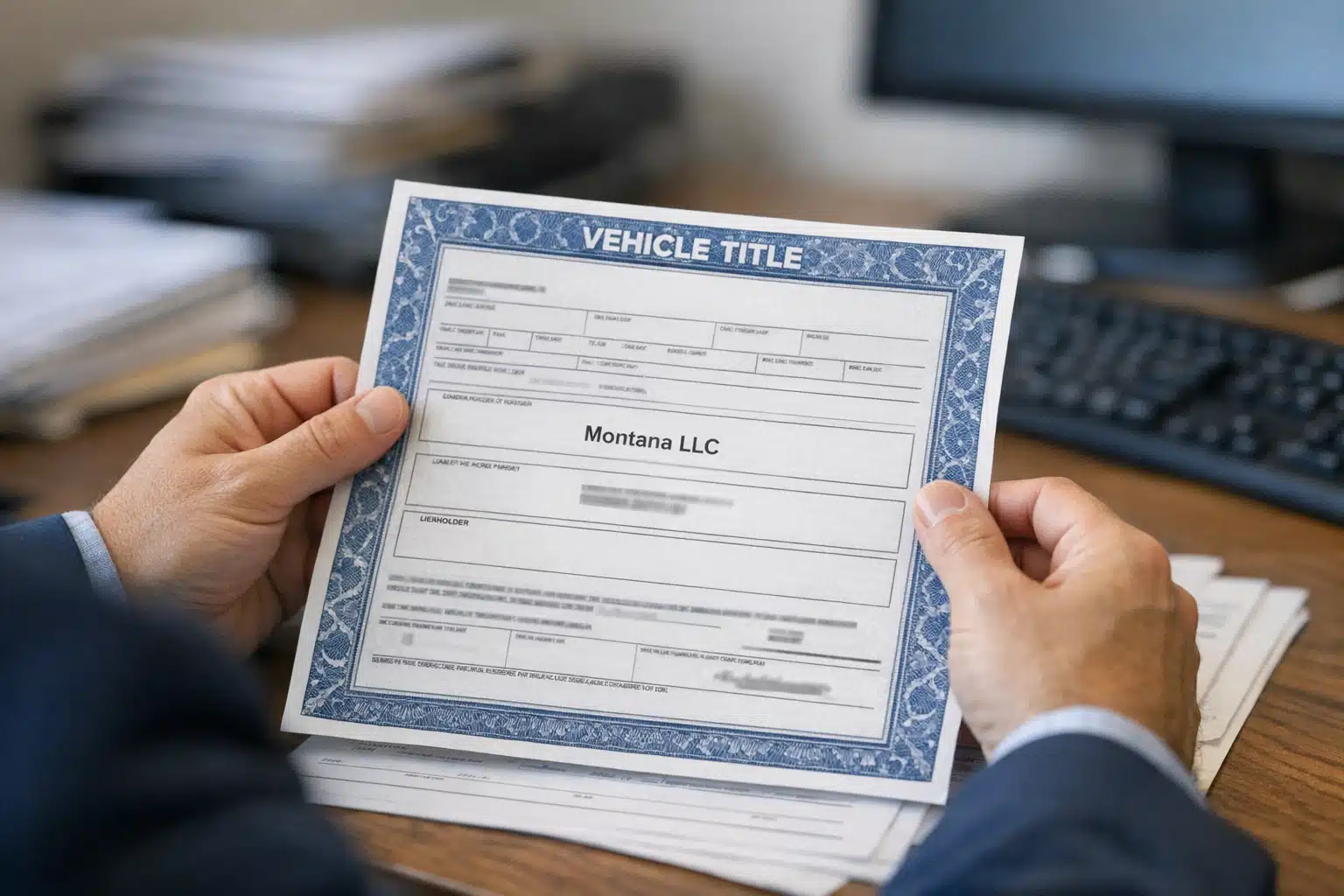
Registering a vehicle with a lienholder using a Montana LLC is possible in 2026, but requires lender approval and additional steps that many registration services overlook.
- Lenders hold security interest in financed vehicles and must agree to transfer the title to an LLC. Many loan agreements contain due-on-transfer clauses that could trigger default, so written approval is required before starting.
- The process involves forming a Montana LLC, obtaining lender consent or a lien release letter, submitting the out-of-state title to Montana, and having the lien re-recorded with the LLC as owner.
- Credit unions and RV-specific lenders tend to be more flexible than large national banks. Common mistakes include starting LLC formation before lender approval, not updating insurance to reflect the LLC, and assuming liens automatically transfer between states.
Yes, you can register a vehicle with a lienholder using a Montana LLC in 2026. A lien does not automatically block registration, but it does require additional steps. Your lender must approve the arrangement, and the title transfer process involves specific requirements that many registration services fail to mention upfront.
Most people assume a lien automatically blocks a Montana LLC registration. It does not — but it does add steps that many registration services never mention. Montana LLC lienholder vehicle registration is possible in 2026, and this post breaks down exactly what your lender needs to approve, how the title transfer works, and where people run into problems.
The short answer: your lender holds the title. That means the lender has to agree to transfer it — or at least accommodate the LLC ownership structure. Some lenders do this without hesitation. Others push back hard. Knowing the difference before you start saves weeks of frustration.
What follows covers the lender side, the paperwork side, and the specific mistakes that cause financed-vehicle registrations to stall or fall apart.
What a Lien Actually Means for Montana LLC Lienholder Vehicle Registration
When you finance a vehicle, the lender holds a security interest in it. That security interest is recorded on the title. The lender’s name appears as the lienholder, and in most states, the lender physically holds the title until the loan is paid off.
Montana is a title-holding state. When you register a vehicle there, Montana issues a new title. If a lien exists, that lien gets recorded on the Montana title — with the lienholder’s name attached.
This is where the LLC structure intersects with the loan. The title will show the Montana LLC as the owner and the lender as the lienholder. That’s a legally valid arrangement. The complication is getting the lender to agree to it.
Why Lenders Hesitate
Lenders write loan agreements against a specific borrower. When you form a Montana LLC and transfer the title to that LLC, you are technically transferring ownership of their collateral to a separate legal entity. Many loan agreements have clauses — sometimes called due-on-sale or due-on-transfer clauses — that treat this as a default trigger.
Not every lender enforces these clauses for LLC transfers. Credit unions, in particular, are often more flexible than large national banks. But you cannot assume flexibility. You have to ask, and you have to get any approval in writing.
A lender that verbally says “sure, that’s fine” and then later claims the loan is in default because the title moved to an LLC is a real scenario — not a hypothetical one.
How to Get Lender Approval Before You Start
Contact your lender’s lienholder or title department directly — not general customer service. Ask two specific questions:

- Does our loan agreement contain a due-on-transfer clause that would apply to an LLC title transfer?
- If we transfer the vehicle title to a Montana LLC, will the lender record the lien under the LLC’s name on the new Montana title?
If the lender says yes to both favorable answers, request written confirmation — an email from a named representative is sufficient. If the lender says the due-on-transfer clause applies, you have three paths: pay off the loan first, refinance into a loan that does not carry that clause, or register the vehicle in your own name and revisit the LLC structure later.
Skipping this step and hoping the lender doesn’t notice is a bad strategy. Lenders receive notification when a title transfers. Many have automated systems that flag it.
The Title Transfer Steps for a Financed Vehicle
Once you have lender approval, the Montana registration process for a vehicle with loan Montana LLC follows a specific sequence. Doing these out of order is one of the most common causes of delay.

- Form the Montana LLC. The LLC must exist before the title can be transferred to it. Montana allows single-member LLCs, and formation takes one to three business days when filed correctly.
- Obtain a lien release letter or lienholder consent letter. Some lenders issue a consent letter that authorizes the title transfer without releasing the lien. Others release the lien temporarily and re-file it under the LLC. Confirm which approach your lender uses before proceeding.
- Submit the out-of-state title to Montana Motor Vehicle Division. Montana requires the existing title, the signed title application (Form MV1), proof of the LLC’s existence (a certificate of organization), and any lienholder documentation. The lien will be re-recorded on the Montana title under the LLC as owner.
- Receive the Montana title with the LLC as owner and lienholder listed. This is the document that confirms the registration is complete. The lender typically receives a copy as well.
- Obtain Montana registration plates and documentation. These go to the LLC’s registered agent address in Montana.
If your current title is held physically by the lender (common with auto loans), you will need the lender to submit it directly to Montana or release it to you temporarily for the transfer. This coordination step is frequently overlooked and adds one to two weeks to the timeline.
What Lenders Will and Won’t Accept
Lenders are not a monolith. Here is how the landscape typically breaks down based on lender type:
- Large national banks (e.g., Chase, Bank of America, Wells Fargo): Most have strict due-on-transfer language. Approval is possible but requires escalation beyond front-line representatives. Expect a longer approval timeline.
- Credit unions: More likely to approve LLC transfers, especially if the member has a long account history. Many credit unions will simply update their records to reflect the LLC as the titled owner.
- RV-specific lenders and marine lenders: These lenders are more familiar with Montana LLC registrations because they see them regularly. Approval rates are higher, and the internal process is often already established.
- Manufacturer financing arms (e.g., Ford Motor Credit, GM Financial): Vary widely. Some have internal policies that explicitly address LLC transfers. Others treat it the same as any other collateral transfer.
In every case, the written approval or written acknowledgment of the lien transfer is what protects you. Verbal confirmation is not enough.
Common Pitfalls with Financed Vehicle Montana LLC Registrations
Pitfall 1: Starting the LLC Formation Before Confirming Lender Approval
Forming the LLC costs money and takes time. If the lender ultimately refuses to approve the transfer, the LLC is either unused or has to be dissolved. Always confirm lender position first.
Pitfall 2: Misreading the Loan Agreement
Due-on-transfer clauses are not always labeled obviously. They can appear under sections titled “Transfer of Collateral,” “Change of Ownership,” or “Assignment.” If the language is ambiguous, ask the lender’s legal or title department for a written interpretation — not a customer service agent’s best guess.
Pitfall 3: Assuming the Lien Automatically Transfers
Montana does not automatically carry forward a lien from another state’s title. The lienholder must actively file or authorize the lien on the new Montana title. If this step is missed, the Montana title may issue without a recorded lien — which puts the lender in a legally weak position and can cause them to demand immediate action when they discover the error.
Pitfall 4: Using the Wrong LLC Structure
A Montana LLC used for vehicle registration should be set up specifically for that purpose. Using an existing business LLC that has other members, existing liabilities, or complex operating agreements can create issues — both with the lender’s review and with how liability protection applies to the vehicle.
Pitfall 5: Not Updating Insurance
Once the title moves to the Montana LLC, the vehicle’s insurance policy must reflect the LLC as the named insured or as an additional insured. Lenders require proof of insurance naming them as the loss payee. If the insurance still shows the individual owner rather than the LLC, the lender can flag a policy gap — and some will. Get the insurance updated in parallel with the title transfer.

 Posted on Google
Does Montana LLC Lienholder Vehicle Registration Make Sense for Your Situation?
If your vehicle is financed, registering it under a Montana LLC is more work than registering an unencumbered vehicle. That is a straightforward fact. The question is whether the registration benefits — no sales tax, no annual property tax, no inspection in most cases — outweigh the additional coordination with your lender.
For high-value vehicles like luxury RVs, coaches, and exotic cars, the math usually works out clearly. On a $250,000 motorhome, avoiding a 9% or 10% state sales tax represents $22,500 to $25,000 in immediate savings. That number makes the lender coordination worth the time.
For a $35,000 truck with a 6% state sales tax, the savings are $2,100. The coordination effort is the same. Whether that’s worth it depends on your time, your lender’s flexibility, and how much of the registration process you can hand off to a service that already knows how to handle financed vehicles.
How TaxFree RV Handles Financed Vehicle Registrations
TaxFree RV has processed Montana LLC lienholder vehicle registrations for clients whose vehicles ranged from financed Class A motorhomes to luxury exotic cars still under manufacturer financing. The lender coordination piece is something we walk clients through before any paperwork is filed.
When you work with TaxFree RV on a vehicle with loan Montana LLC registration, the process starts with a review of your loan agreement and lender type — not with filing the LLC. That order matters. It prevents the situation where a client is halfway through the registration and discovers their lender won’t cooperate.
TaxFree RV provides Montana registered agent services, LLC formation, title transfer coordination, and ongoing registration renewals. For financed vehicles, we also provide documentation guidance so you know exactly what your lender needs to see and in what format.
Reach out to TaxFree RV at 1-888-441-5741 or sales@taxfreerv.com to get a clear answer on whether your financed vehicle qualifies and what your lender will need before the process starts.
Key Takeaways
Registering a financed vehicle under a Montana LLC is legal and workable in 2026 — but the lender must be part of the conversation from the start. The title cannot move to the LLC without lender acknowledgment, and that acknowledgment must be in writing.
The steps are: confirm lender approval, form the LLC, coordinate the title and lien transfer, and update insurance. Each step feeds the next. Skipping or reordering them is where most financed-vehicle registrations run into trouble.
If you have a financed RV, motorhome, or high-value vehicle and want to register it under a Montana LLC, contact TaxFree RV before you do anything else. Start with the lender question — everything else follows from there.
Sources
- Montana Department of Justice – Motor Vehicle Titling
- Montana Secretary of State – Business Entity Forms and Filing
- Consumer Financial Protection Bureau – What Is a Lien?