
Understanding the Tax Implications of Selling a Vehicle Registered with a Montana LLC

Selling a vehicle registered under a Montana LLC differs from selling a personally owned vehicle because the transaction flows through the LLC, affecting how taxes are calculated and reported. The sale appears on the owner's personal tax return since most Montana LLCs are single-member disregarded entities.
- Capital gains treatment depends on how long the vehicle was owned and whether it was used for business. Personal-use vehicles held over one year qualify for long-term capital gains rates, while business vehicles may trigger depreciation recapture taxed as ordinary income.
- Montana has no general sales tax, so buyers pay no Montana sales tax on the transaction. However, Montana residents owe state income tax on capital gains at 4.1% for 2024, and buyers must pay their home state's use tax when registering.
- Sellers should gather cost basis documentation, calculate adjusted basis after depreciation, and file appropriate forms including Schedule D, Form 8949, and Form 4797 for business property sales.
When you sell a vehicle registered under a Montana LLC, the transaction flows through the business entity rather than being treated as a personal sale. This changes how taxes are calculated, reported, and paid. The LLC structure affects capital gains treatment, sales tax obligations, and reporting requirements, making it different from selling a personally owned vehicle.
What Montana LLC Vehicle Sale Tax Actually Means for Sellers
Selling a vehicle registered under a Montana LLC is not the same as selling a personally owned vehicle. The transaction flows through the LLC, and that distinction changes how taxes are calculated, reported, and paid.
Many owners set up a Montana LLC to register a high-value RV, motorcoach, or exotic car — and avoid sales tax at the point of purchase. That strategy is legal and well-documented. What gets less attention is what happens on the back end, when it’s time to sell.
This post walks through the Montana LLC vehicle sale tax picture from two angles: what the IRS sees, and what Montana’s state rules require. Both matter, and ignoring either one creates real financial risk.
How the IRS Treats a Vehicle Owned by an LLC
Single-Member LLCs Are “Disregarded Entities”
Most Montana vehicle registration LLCs are single-member LLCs. The IRS classifies a single-member LLC as a disregarded entity by default. That means the LLC itself does not pay federal income tax.
Instead, all income and gains flow directly to the owner’s personal tax return — specifically Schedule C or Schedule D, depending on how the vehicle was used.
This matters enormously when selling an LLC vehicle. The sale does not disappear into the LLC structure. It lands squarely on your Form 1040.
Capital Gains vs. Ordinary Income: Which Applies?
The tax treatment of the gain depends on two things: how long you owned the vehicle and whether it was used for business.
If the vehicle was held purely as a personal asset for more than one year, the gain qualifies as a long-term capital gain — taxed at 0%, 15%, or 20%, depending on your income bracket.
If the vehicle was used in a trade or business — and depreciation was claimed — a different rule applies. The IRS uses Section 1245 recapture to tax any depreciation taken on the asset as ordinary income, not capital gains. That can push the effective tax rate significantly higher.
What About Losses on a Personal-Use Vehicle?
A capital loss on a personal-use vehicle is not deductible. If you paid $400,000 for a motorcoach and sell it for $280,000, you cannot claim that $120,000 loss on your return.
This is one of the more frustrating asymmetries in the tax code. Gains on personal-use assets are taxable; losses are not deductible.
Business-use vehicles operate under different rules — losses on a business asset generally are deductible, subject to basis calculations and depreciation recapture.
Montana State Tax Considerations When Selling an LLC Vehicle
Montana Has No General Sales Tax
Montana does not impose a general sales tax. That is the foundation of the Montana LLC registration strategy.
When you sell the vehicle, the buyer also does not pay Montana sales tax on the transaction — provided the sale occurs properly within the LLC structure. This is one area where Montana LLC ownership retains an advantage even at the point of sale.
Montana Does Have an Individual Income Tax
Montana residents pay state income tax on capital gains. As of the most recent rate schedule, Montana taxes long-term capital gains at a flat rate of 4.1% for tax year 2024, following changes under HB 303.
Non-residents who own a Montana LLC and sell a vehicle are generally not subject to Montana income tax on that gain — because the gain is derived from a personal-property transaction, not Montana-sourced real property income.
However, this area of law has nuance. Non-residents with Montana business income should verify their specific filing obligations with a tax advisor before assuming no Montana return is required.
Montana LLC Annual Fees and Dissolution Costs
When you sell the vehicle and no longer need the LLC, you will want to dissolve it. Montana charges a $15 annual fee for LLCs, which continues until the entity is formally dissolved with the Montana Secretary of State.
Dissolving the LLC requires filing Articles of Dissolution and paying any outstanding fees. Leaving the LLC open after the vehicle is sold creates ongoing compliance obligations with no benefit.
The Title Transfer Process When Selling an LLC Vehicle
Selling an LLC vehicle is a two-part transaction: the business entity sells the asset, and title transfers to the buyer.
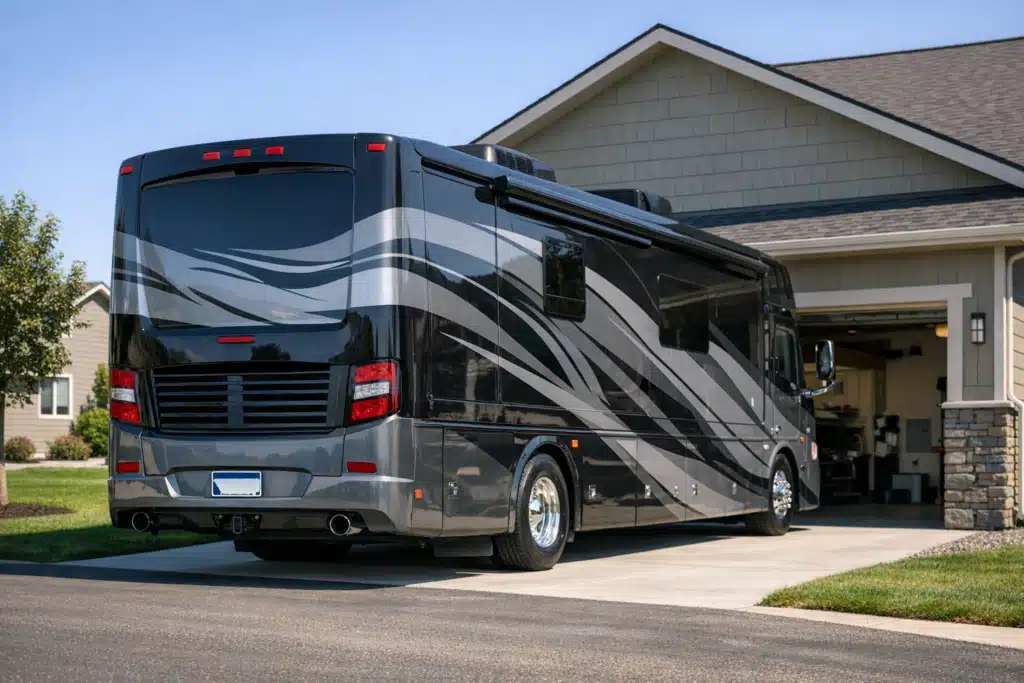
Here is how the transfer sequence works:
- The LLC executes the sale. The operating agreement for the LLC typically authorizes the member(s) to sell assets. The seller signs as the authorized representative of the LLC — not as an individual.
- The title reflects the LLC as seller. The Montana title will show the LLC as the registered owner. The seller signs the title over as “Manager” or “Member” of the LLC, with the LLC name listed as seller.
- The buyer registers the vehicle in their state. When the buyer takes the vehicle to their home state DMV, they will owe their state’s applicable use tax or sales tax on the purchase price. The Montana LLC structure does not eliminate the buyer’s home-state tax obligation.
- The LLC receives payment. Proceeds go to the LLC account, then are distributed to the member. For a disregarded entity, this is a pass-through — there is no second layer of tax at the LLC level.
Depreciation Recapture: The Hidden Tax Exposure Most Sellers Miss
This is where Montana LLC vehicle sale tax gets complicated for owners who used the vehicle in a business.

Say you registered a Class A motorhome through a Montana LLC and rented it out on a platform like RVshare. You claimed depreciation over several years — a legitimate deduction. Now you sell the RV for more than its adjusted basis (original cost minus accumulated depreciation).
The IRS requires you to recapture that depreciation as ordinary income under Section 1245. At a 37% top marginal rate, that is a meaningful tax hit.
A concrete example:
- Purchase price: $350,000
- Depreciation claimed over 4 years: $80,000
- Adjusted basis: $270,000
- Sale price: $320,000
- Total gain: $50,000
- Section 1245 recapture (ordinary income): up to $50,000 of that gain, taxed at your marginal rate
Sellers who did not claim depreciation — because the vehicle was purely personal — avoid recapture entirely. But they also cannot deduct any loss on the sale.
What Happens If the Buyer Is in a High-Tax State?
This is a question that comes up when selling an LLC vehicle to a buyer who lives in California, New York, or another state with aggressive tax enforcement.
The buyer’s home state will assess use tax on the vehicle when they register it locally. That is the buyer’s tax burden, not the seller’s. Montana’s no-sales-tax structure does not protect the buyer from their own state’s tax laws.
Some states have become aggressive about auditing buyers who purchase through Montana LLCs. California, in particular, has pursued use-tax assessments on residents who buy vehicles through Montana entities and keep them in-state.
As a seller, you are not liable for the buyer’s use tax. But if you are selling to someone in a high-tax state, it is worth flagging this clearly in the transaction — buyers sometimes try to rescind deals or demand price adjustments after discovering their home-state tax bill.

 Posted on Google
Key Tax Filing Requirements When You Sell
When you complete the sale, here is what the tax reporting looks like on your end:
- Form 8949 and Schedule D: Report the capital gain or loss from the sale. List the LLC as the seller, note the acquisition date, and calculate the gain based on your adjusted basis.
- Schedule C (if business use): If the vehicle was a business asset, the sale may be reported here or on Form 4797 (Sales of Business Property).
- Form 4797: Required for selling depreciable business property. This is where Section 1245 recapture is calculated and reported.
- State return: Montana residents report the gain on their Montana Form 2. Non-residents generally do not file a Montana return for personal property gains, but should confirm with a tax professional.
Practical Steps Before You List the Vehicle for Sale
Getting the financial side right before you list saves time, prevents surprises, and protects you from underpaying taxes.
- Locate your cost basis documentation. Pull the original purchase invoice, any capital improvements made, and your depreciation schedule if applicable. Your gain is calculated from this number.
- Determine adjusted basis. Subtract any depreciation claimed from the original purchase price. If no depreciation was claimed, your basis is the original cost plus improvements.
- Estimate the gain. Compare your likely sale price to your adjusted basis. If the number is significant, consult a CPA before the sale closes.
- Review the LLC operating agreement. Confirm who has authority to sell LLC assets. If there are multiple members, all may need to consent.
- Plan for dissolution. If you will not use the LLC after the sale, begin the dissolution process promptly. File Articles of Dissolution with the Montana Secretary of State.
- Notify your registered agent. Your Montana registered agent (required by state law) should be informed of the dissolution so they can cease service and you stop paying associated fees.
When a Montana LLC Sale Has No Federal Tax Consequences
Not every sale generates a taxable gain. Two scenarios result in zero federal tax due:
1. You sell at a loss on a business-use vehicle. If the adjusted basis exceeds the sale price, and the vehicle was a business asset, you have a deductible loss — not a gain. Report it on Form 4797.
2. Your gain falls within the 0% long-term capital gains bracket. For tax year 2024, married filers with taxable income below $94,050 pay 0% on long-term capital gains. A gain on a personal-use vehicle held over one year could be completely tax-free depending on your income level.
Knowing which scenario applies to you is not a guess — it requires a calculation based on your specific numbers.
Wrapping Up: What Sellers Need to Remember
Montana LLC vehicle sale tax is not a single number or a fixed rule. It depends on how the vehicle was used, how long you owned it, whether depreciation was claimed, and what state you live in.
The Montana LLC structure solved the sales tax problem at purchase. At sale, federal capital gains rules and your home state’s income tax take over. Those are the two factors that drive your actual tax bill.
If you have questions about setting up or dissolving a Montana LLC for vehicle registration, the team at TaxFree RV has helped thousands of owners work through exactly these decisions. Reach out at 1‑888‑441‑5741, email sales@taxfreerv.com, or visit taxfreerv.com to get started.
Sources
- IRS Publication 544 — Sales and Other Dispositions of Assets
- IRS — About Form 4797, Sales of Business Property
- Montana Secretary of State — Dissolve a Business Entity
- Montana Legislature — HB 303, Capital Gains Tax Rate Reduction